


Autoflowering plants

Clock
They germinate, veg, and flower on a built-in schedule no matter the light regimen
Time
Some commercial lines finish about 90 to 100 days from seed
Size
Most stay small
Clones
They are hard or impossible to run as cuts, so feminized seed is the practical path
Ruderalis
Far-north ruderalis and many northern males are not photosensitive. Age and development flip them, even under continuous light
Why 12/12 became the default

Catch-all: Twelve hours of dark flowers nearly every variety, which is why early books taught it.

Reality: Most modern plants need less than 12 hours of dark to start.

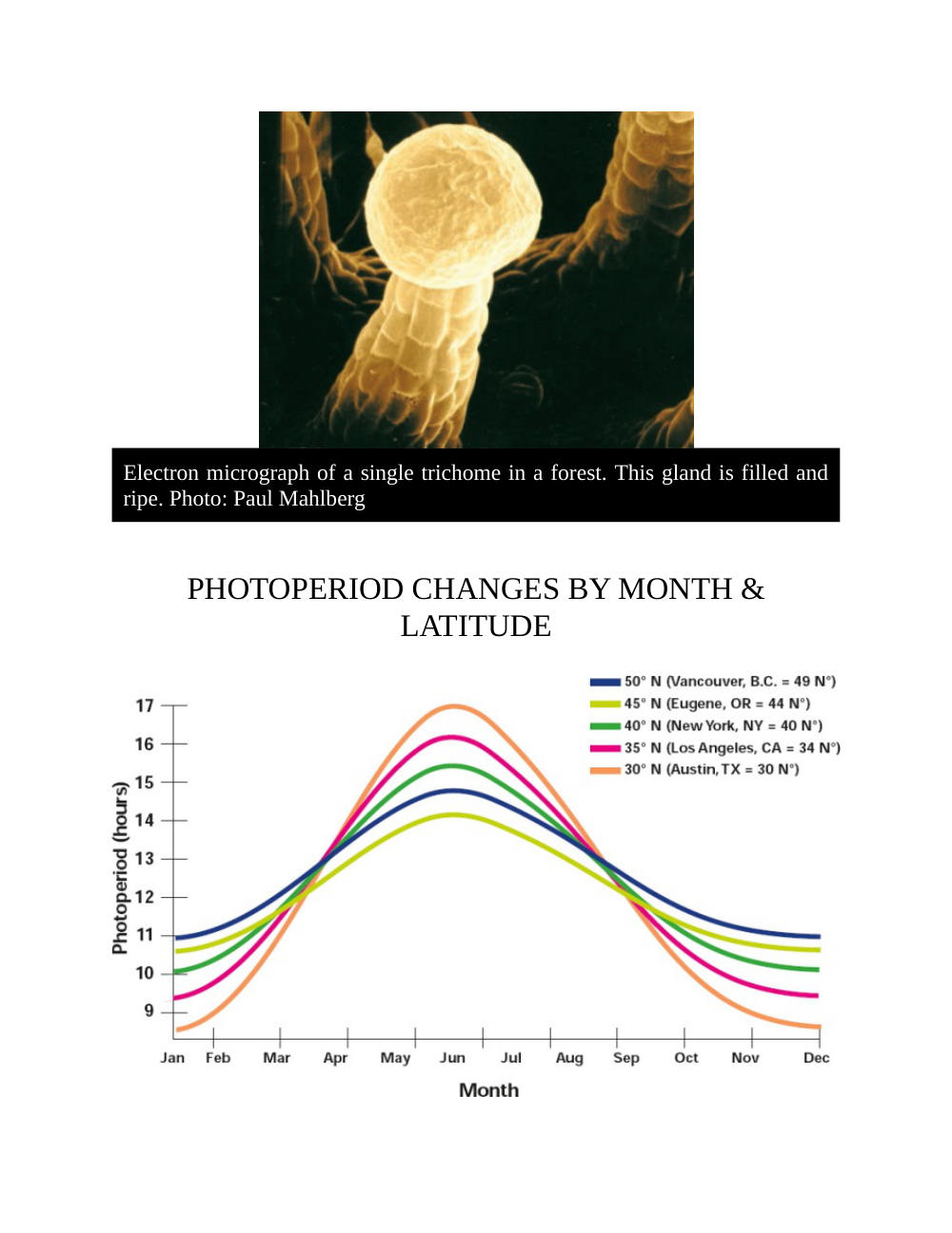
Outdoor proof: If they truly needed 12 hours, they would not start until September 21 and would finish in November. They start weeks earlier.

Example: An eight-week plant due October 1 in San Francisco was starting around August 1 on about 9 hours 40 minutes of true dark, including dawn and dusk red.
Using a shorter night indoors
More light
If a plant's critical night is 10 hours, 14 hours of light gives about 17 percent more energy than 12/12
Still flower
Ten hours of dark can start that plant. You do not have to sit at 12 to be safe once you know the cut
Then ripen
Add an extra hour of dark after 3 or 4 weeks if you want a faster finish
Unusual starts
An indica grown on 24-hour light may even initiate on only 8 hours of dark because the change itself is the cue
Outdoor night-break and force
Keep veg
A brief red-rich flash in the middle of the night resets the dark count. Warm-white CFL or HPS works. Incandescent is weak because of far-red
Flash length
Seconds can be enough if every leaf is hit. Think of wetting every leaf with light, then stopping
Force
When you want flower, stop the night-break or pull blackout for a 12-hour dark
Summer finish
Forcing in June or July aims the harvest at stronger light and more UVB than a November cut