


Fuel-burning generators

Fuels
Propane or natural gas, burned clean so the book states no carbon monoxide and no toxic residue when the unit is working correctly
Outputs
Each pound of gas burned makes about 3 lb of CO2, 1 lb of water, and about 21,800 BTU of heat
Cold rooms
That heat and humidity can be useful
Warm rooms
You must dump the heat. Some units water-cool the burner; the moisture still stays in the air
Speed
Even a small indoor unit can raise ppm very quickly
Other burners
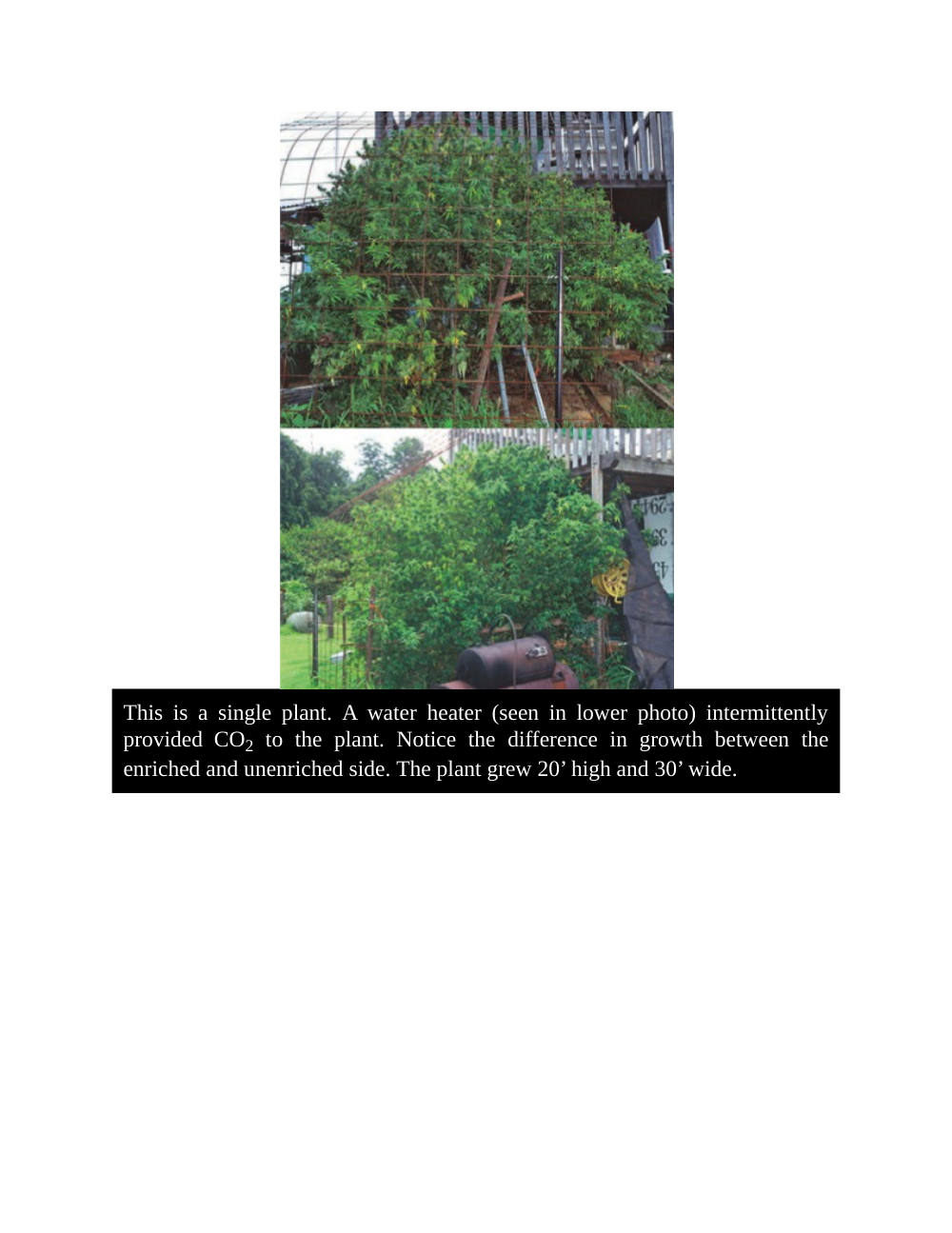
A water heater, furnace, dryer, or stove in or vented into the room also pulses CO2, but on an appliance schedule, not a plant schedule
Dry ice and seltzer
Dry ice
Solid CO2 at -109°F. Handle with insulation. It is easy to freeze skin
Yield
1 lb evaporates to 8.7 ft³ of gas, same as 1 lb from a tank
Rate
About 7% per day in a freezer, much faster at room temperature, and hard to meter
Handling
Inconvenient and easy to injure skin. Most growers pick a tank instead
Seltzer
Mist salt-free carbonated water on seedlings, clones, and small plants. Buying bottles for large plants is expensive; a home carbonator cuts cost
Vinegar, fermentation, and breath
Vinegar drip
Drip 5% vinegar into baking-soda water to meter a small stream of CO2
Recipe
3 quarts of 5% vinegar plus 3.7 oz baking soda ≈ 1 ft³ of CO2. One cubic meter needs about 101 L vinegar and 3.7 kg soda
Cost
Fine only for a tiny garden
Fermentation
Yeast plus sugar in a jug. 1 lb sugar yields about 0.5 lb CO2 (4.35 ft³). The run lasts about four days, then you remix
Beer-strength limit
Most beer yeast slow near 5-8% alcohol. Keep sugar around one-tenth of the water weight (about 13 oz per gallon, or 80 g per liter)
People and pets
A 150 lb person exhales about 0.9 kg CO2 per day, about 0.326 ft³ per hour. Filter garden air if animals shed dander onto sticky flowers
Compost outdoors and in tunnels
Pile in the block
A compost heap in a dense outdoor planting sheds CO2 that breeze carries through the crop
Under a plant
A small bin under a large plant sends warm gas up through the canopy
Mulch
Thin compost or moist organic mulch plus a little nitrogen wakes microbes. They make more CO2 in warm daylight than at night
Mass balance
About one-sixth to one-quarter of starting wet weight becomes carbon in CO2. A 100 lb pile can yield about 61-93 lb of CO2 over 30 days, or about 2-3 lb (16-25 ft³) per day
Night waste
The pile runs day and night, so much of the gas is emitted when stomata are closed
Afterward
Finished compost or vermicompost still feeds soil or tea