


Drip parts

Main line
A pump sends solution through a header the length of the garden
Spaghetti
Small tubes tap the header and end in an emitter on a stake
Rate
Emitters are rated, for example 1 gallon per hour. Match flow to plant size or use more than one
Rings
A circular drip wets LECA more evenly than a single point
Media
Works on rockwool, coir, vermiculite-perlite, peat, and LECA
Convert
A reservoir or wick tray becomes active if you add a pump and emitters
Drain and slope
Recirculate
Almost all hydro drip returns runoff to a tank
Slope
About 2.5 percent, or 1 inch in 40 inches, so water leaves the bench
Channels
Corrugated plastic or gutters guide drain to a trough and catchment
LECA leftover
A drain raised about 1.5 inches can leave a shallow pool so pebbles stay moist
Wetter mix
Vermiculite-perlite does not need that leftover pool. Keep the drain at tray level
Reservoir sizing
Measure
Run emitters onto the bench and time one minute of flow
Target
A tank about 100 times that minute-volume cuts maintenance
Smaller tank
Use the largest you can. Small reservoirs swing pH and strength faster
Return
A sump in the catchment, or a direct drain, sends water home
Filters
A pressure regulator and filter keep emitters from clogging
Salt and flush
Buildup
Evaporation leaves fertilizer residue in mix and hydro media
Periodic rinse
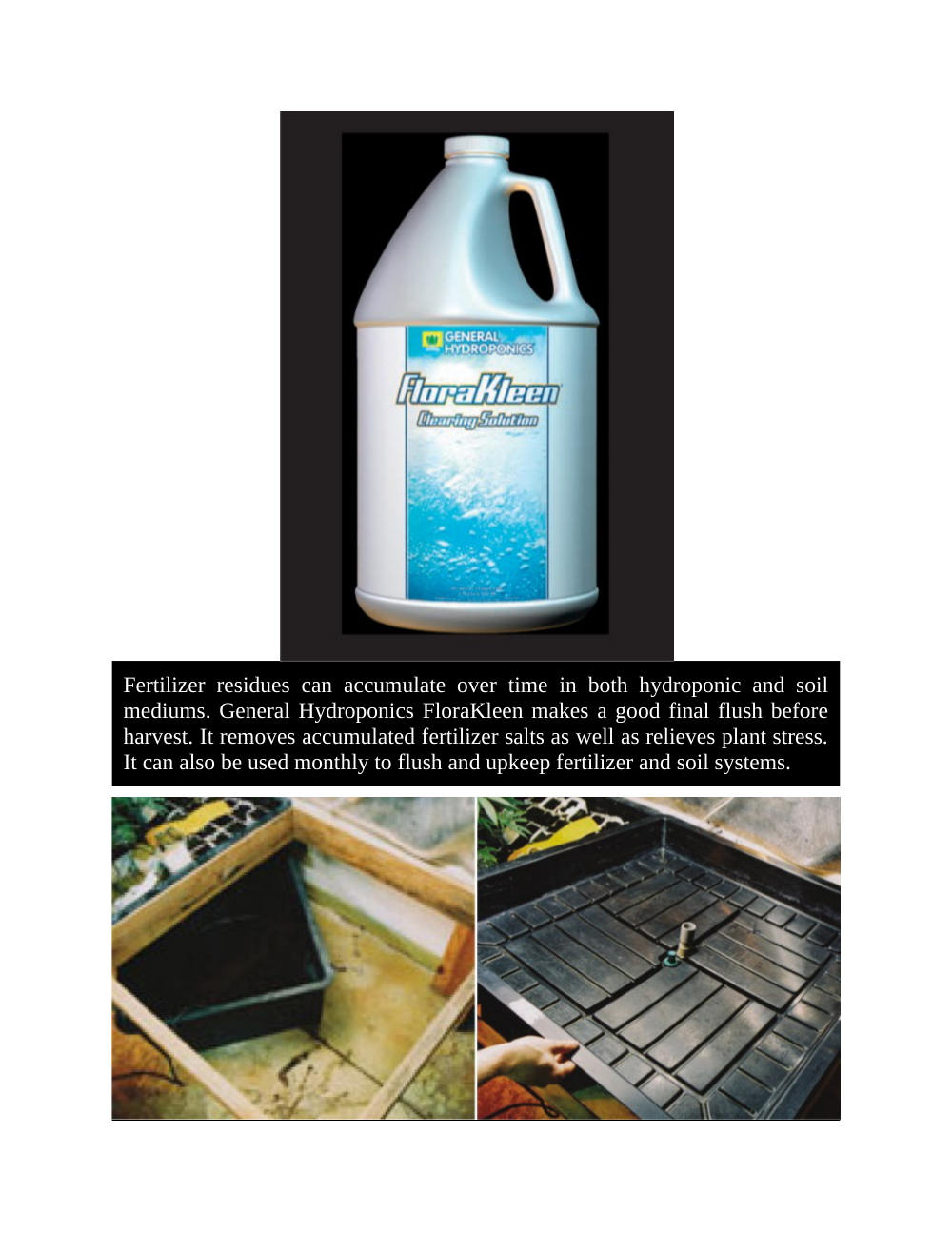
A plain-water or dedicated flush now and then clears accumulated salts
Before harvest
A final flush is a common way to reduce leftover fertilizer in the root zone
Top-down
On recirculating trays, occasional top watering washes crust back into the reservoir