


Indoor pot volume
Rule
Plan about 3 to 5 gallons of root space per square foot of finished canopy
Fit
Sixteen of those pots fill a 4 by 4 foot area without crowding into a rootbound knot
Sea of green
Many single-stem plants in 3 to 4 quart, 6 inch pots can fill the same footprint
Larger heads
Wider pots grow wider plants. Seed plants need more height for the taproot than clones
Beds
An indoor planting bed removes pot walls so roots share one volume you refresh between crops
Container facts
Shape
A rectangle holds more mix than a circle of the same outer size
Drain
Side holes beat bottom-only holes on a solid floor, which block easily
Bags
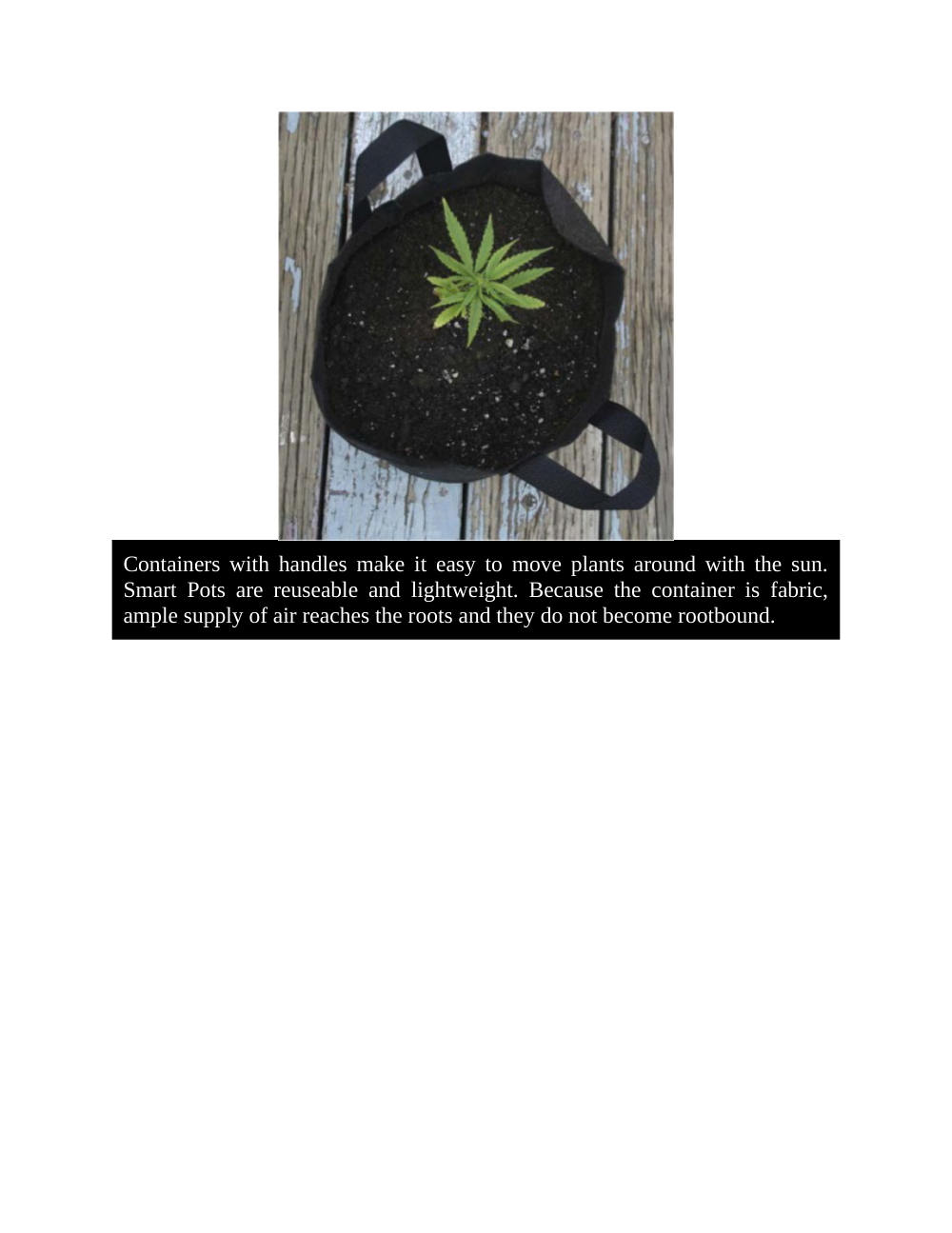
Lightweight grow bags work indoors and out. Gusseted bags with a flat base stand better
Handles
Handles or a hand truck cut fatigue when pots get heavy
Retail bags
The mix bag itself can be the pot if you add drainage. Stack two bags for a bigger plant
Wheels
Casters let you chase sun or reorganize a room
Outdoor container care
Heat
Dark pots cook roots in sun. Wrap, paint light, or slip them into a basket
Evaporation
A white cover on the pot wall slows water loss
Escape
If a pot sits still, let some roots leave into the ground for extra water and feed
Fabric
Breathable fabric pots air-prune roots and are lighter to reuse than rigid plastic
Rootbound
When roots circle and cannot forage, water and nutrients run out even if you feed on time
Mix texture in a pot
Air
The mix must drain so oxygen refills the pores after each watering
Fines
Fine mixes suit pots up to about 6 inches. In large pots they stay soggy
Squeeze
Moist mix should clump in a fist, then break with a light poke
Looseners
Coir, perlite, vermiculite, or compost open a mix that stays in a hard ball