


Why they fight a typical indoor

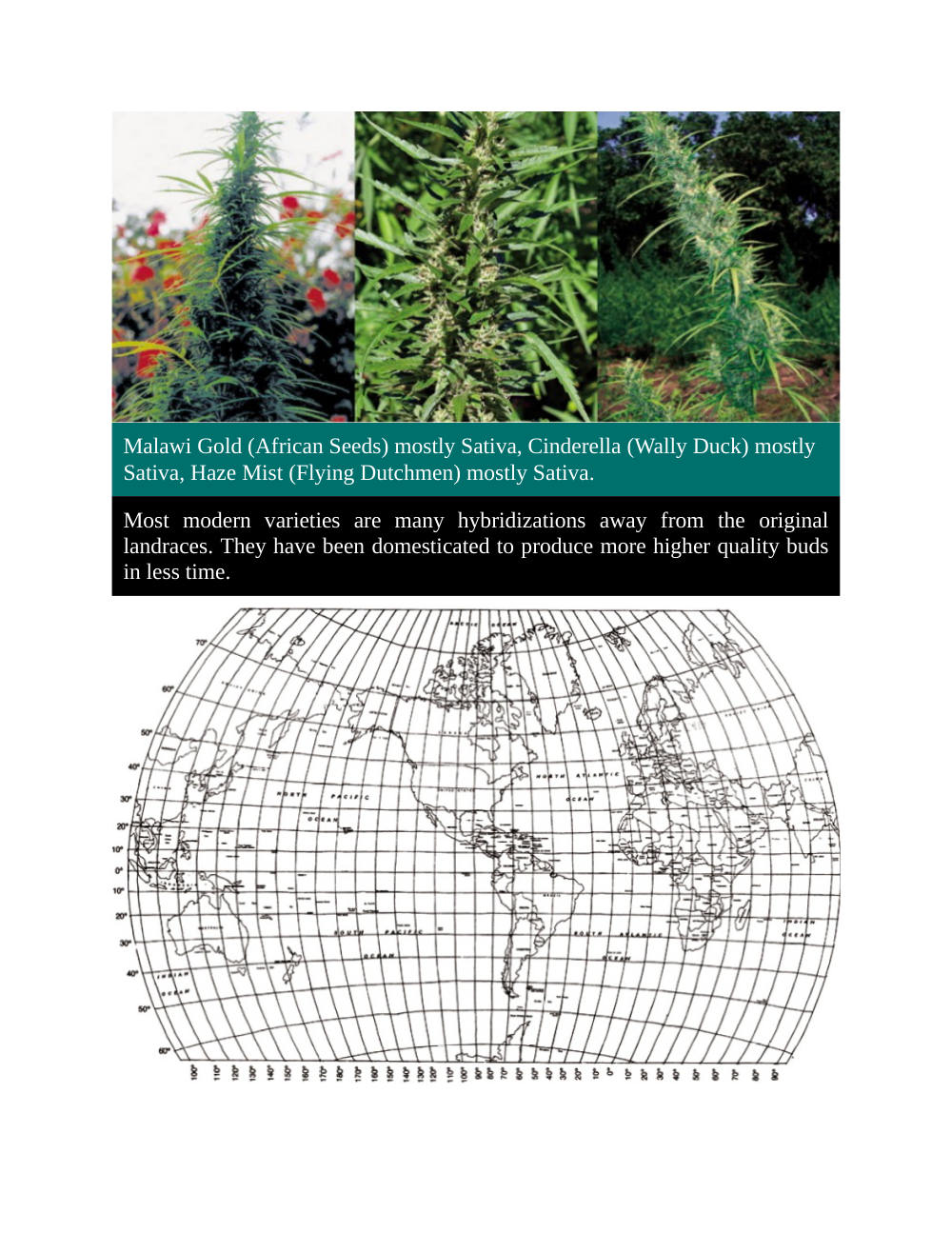
Sun angle: Equatorial sun hits straight on. Higher latitudes get a weaker, more slanted beam.

Genetics: Landraces from that belt expect that intensity.

Unpopular: Extra light, extra space, and extra weeks keep them off many indoor lists.

Indica contrast: Mountain indicas stayed short and thick to handle wind, drought, and poor soil.
Light and space

Standard room
A common indoor target is a 1000 W lamp over 4 x 4 ft, about 60 W per square foot
Sativa room
Tighten that to a 1000 W lamp over 3 x 3 ft so intensity rises
Footprint
Give sativas two to four times the floor that you give indicas
Internodes
They stretch fast to grab canopy. They are not the compact hybrids most tents are built for
Height tools
Training
Early flower, pruning, bending, and super-cropping can hold height down a bit
End-of-day blue
A strong 6500 to 7000 K blue for about an hour as the main lights go off may shorten stretch
Dose
That blue pass needs at least about 20 W per square foot and should sweep most of the tissue
Cool morning
Dropping temperature about 10 degrees for an hour before lights-on also slows stem push
Wind
A draft hard enough to bend stems builds shorter, thicker trunks
Time and photoperiod
Indoor clock
Never give these plants more than 12 hours of light once you want flower
Faster flip
Some growers drop to 10 hours from sprout to hurry ripening
Still growing
Young sativas often keep stacking vegetative growth while they flower
Outdoor
Finish can land in November through January. They do not like freeze or snow
Winter start
In a frost-free south, starting outdoors in September uses short days to keep plants shorter