


What heat does to growth

Survival
Outdoor plants can take brief spells near 120 F (49 C) if roots are large and water is easy to reach
Peak photosynthesis
Around 85 F (30 C) with very strong light, about 6000 to 7500 foot-candles
Slowdown
By 90 F (32 C) photosynthesis fades. Near 95 F (35 C) it stops and the plant only tries to stay cool
Flower cost
Hot bloom makes airy, lanky buds. Summer-forced flower in a hot climate is a yield risk
Measure the canopy
Leaf surface
An infrared thermometer on the leaf is the reading that matters
Canopy air
Place a normal thermometer at the tops, not on the floor or in the aisle
Hot spots
Room air can look fine while the zone under a lamp is far too hot
Lamp heat
An uncooled 1000 W halide and ballast dump about 3500 BTUs. Air-cooled fixtures drop that to roughly 500 to 1500
Indoor cooling options
Do not trap heat
Use air- or water-cooled lights and keep ballasts outside the tent
Flip the clock
If lamps are the only light, run them at night when outdoor air is cooler
Filtered intake
Bring in cool evening or winter air through an insect-and-spore filter
Air conditioner
Portable or through-wall units dump heat without sending garden odor outside
Evaporative cooler
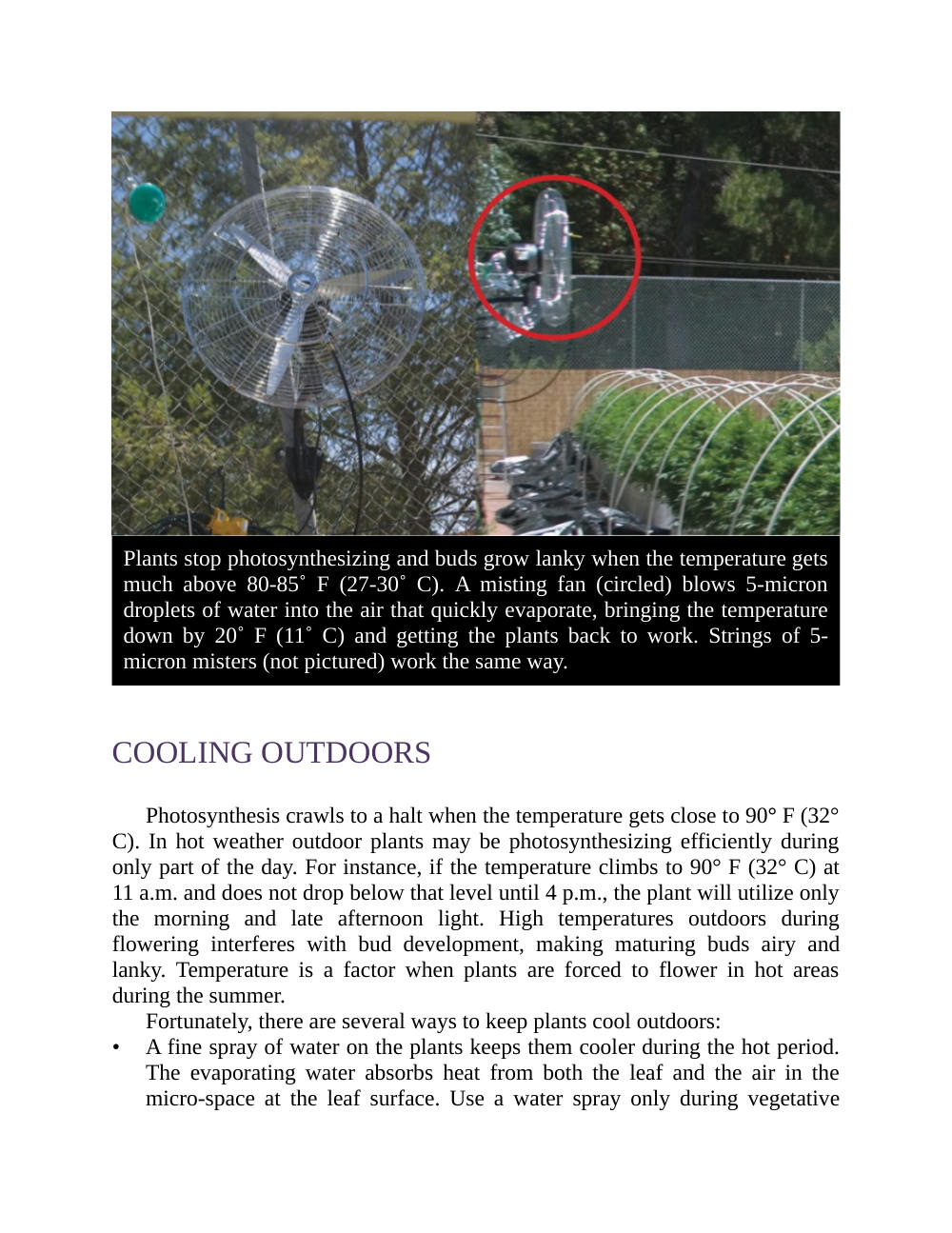
A swamp cooler or 5-micron mist works best in hot, dry rooms and can drop air 20 F or more
Outdoor cooling options
Lost midday
If air sits above 90 F from late morning to late afternoon, only morning and evening light is useful
Fine spray
A light vegetative mist cools the leaf surface. Finish early enough that foliage is dry by dusk
Dry-air fog
5-micron misters or fog fans cool the space without wetting flowers and can drop temperature as much as 30 F in dry weather
Keep soil wet
Moist soil releases water more easily than a dry, high-tension pot