


Pigments
Main trio
Chlorophyll A, chlorophyll B, and beta-carotene do most of the capture
Peaks
They work best in red and blue bands and waste more of green and yellow
Antennae
Pigments sit in large protein arrays that funnel excited electrons to a reaction-center chlorophyll
Density
Hundreds of photosystems per chloroplast, dozens of chloroplasts per cell, and huge cell counts per leaf
Why plants look green

Bounce: Green is reflected or passed through more than other visible colors.

Canopy clue: A green peak in light under leaves is a sign of that leftover band.

In the leaf: Packed pigments and energy sharing still let some green work, more than a test-tube chlorophyll curve suggests.

Accessories: Extra pigments catch orange, yellow, and green and hand the energy to chlorophyll.
Far-red and shade
Pass-through
Far-red light travels through the canopy better than red
Ratio
Shade has a higher far-red to red ratio
Stretch
Plants read that ratio as being under other leaves and lengthen stems to find a gap
Low light help
Far-red between 700 and 800 nm can raise photosynthesis in dim conditions by rearranging Photosystem I and II stacks
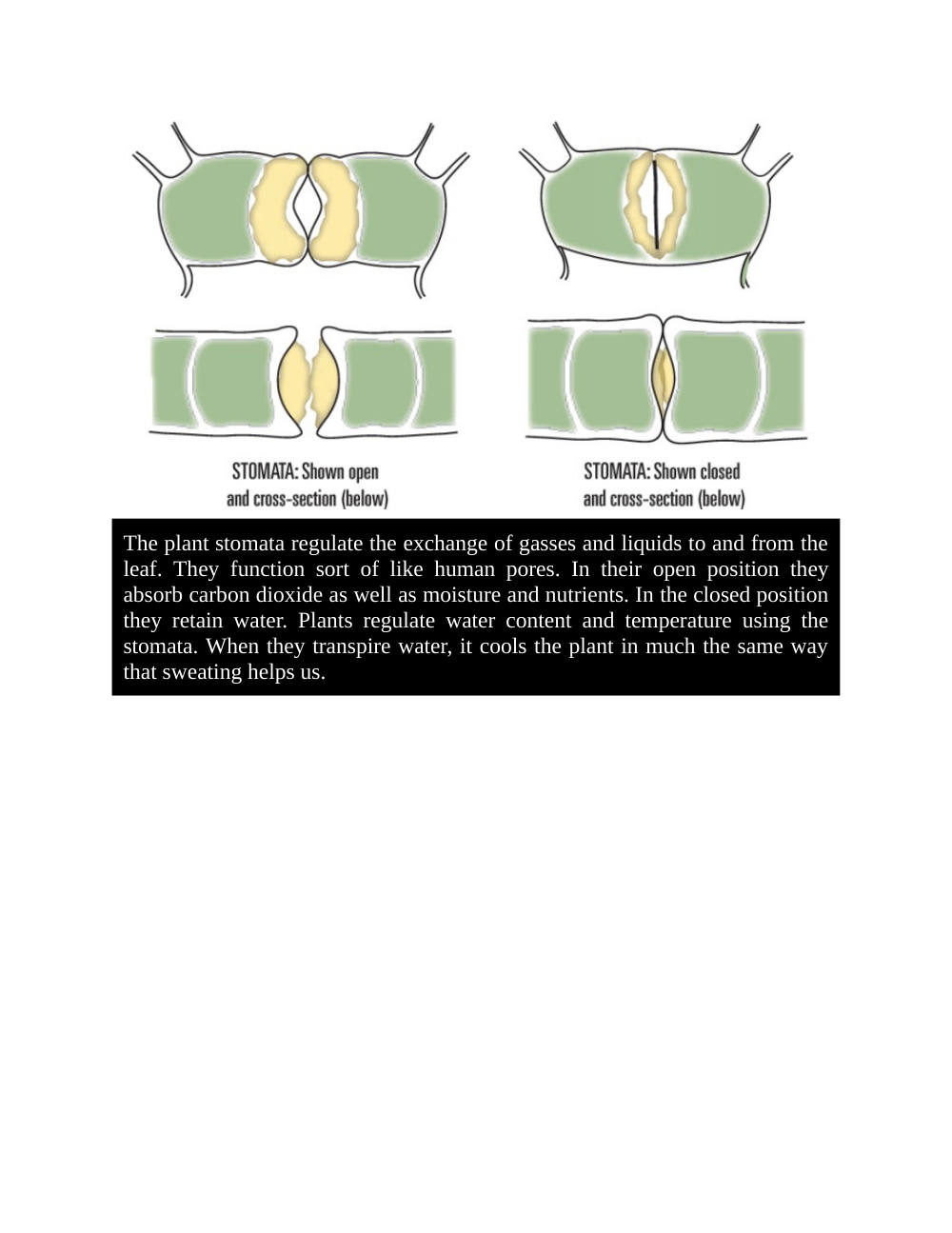
Stomata
Valves
Leaf pores open to take in CO2, moisture, and some nutrients
Close
Shut pores hold water when the plant needs to conserve
Cooling
Transpiration cools tissue the way sweat cools skin
Balance
Gas exchange and water loss are the same door. Stress that door and photosynthesis drops