


Tradeoffs

Both work
Mix and hydro can produce high yield if you keep the root zone in range
Hydro plus
Less hauling of spent mix, smaller pots, and often faster growth
Hydro minus
No organic buffer. You keep pH and strength right or the plant shows it quickly
Mix plus
Bark, coir, compost, and peat smooth peaks and troughs in the feed
Preference
Many connoisseurs still prefer organically grown flowers to hydro
What modern mixes contain
Inert base
Peat, bark, coir, rice husks, vermiculite, and perlite also appear in fertigation and hydro
Living extras
Compost, castings, guano, seed meals, rock dust, and animal meals can feed a month to six weeks
Mineral bags
Some mixes include soluble or time-release fertilizer meant to last months in a large pot
Shared rule
Roots still need enough volume to forage, even in a fortified bag
Fertigation

Hybrid
Ordinary pots of non-nutritive mix, watered by hand, drip, or capillary mat, with nutrients in the water
Why nurseries use it
Simple to build, easy to scale, and familiar pot handling
Media
Any inert mix works. Peat blends are common because they are cheap, buffer, and wick well
Watering
Peat and vermiculite-perlite need fewer irrigations than bare LECA or rockwool
Control
You still manage EC and pH, but the mix forgives small misses
Passive versus active hydro
Passive
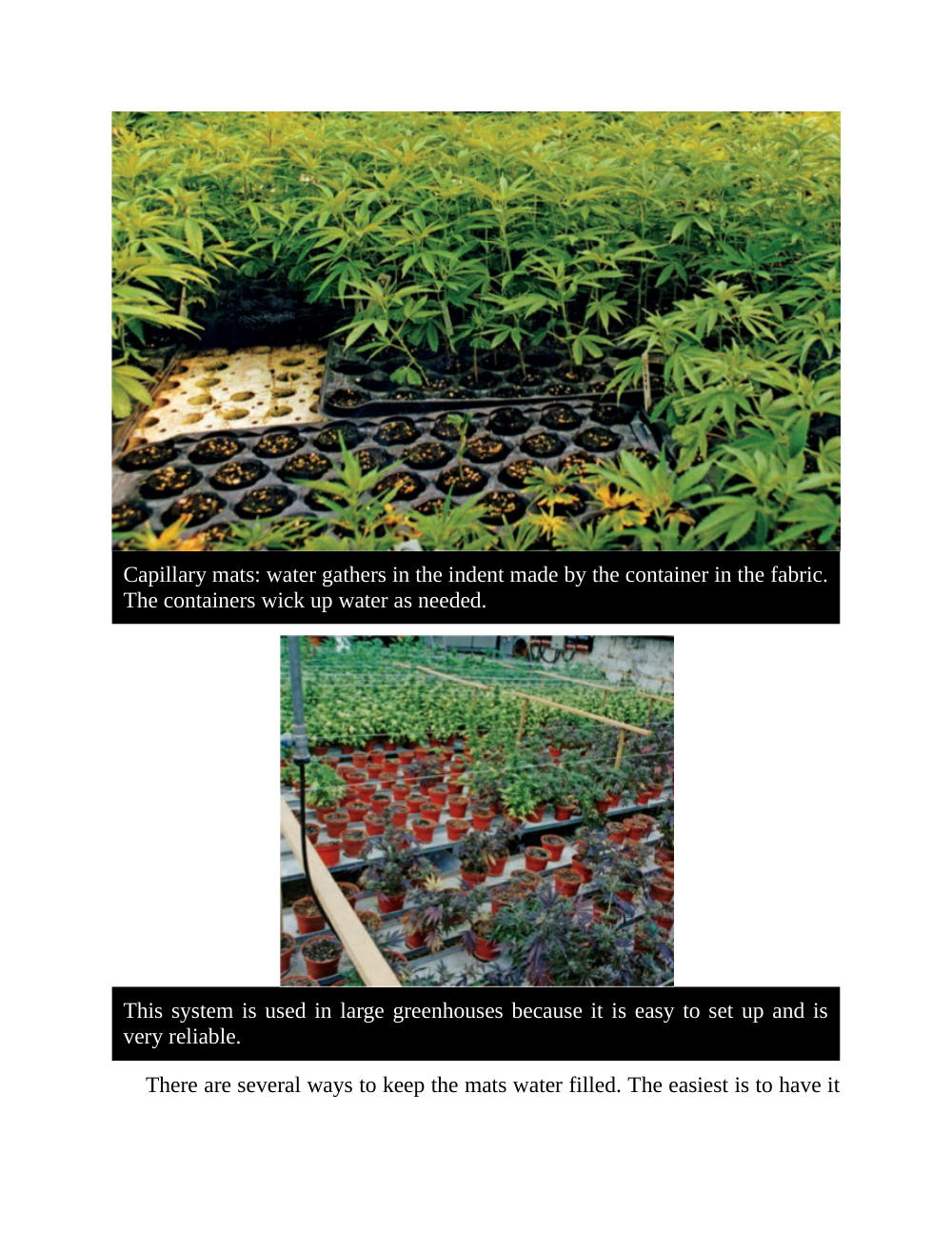
Reservoir and wick systems move water by capillary action. No flood pump required
Active
Deep water culture, drip, ebb and flow, nutrient film, and aeroponics use a pump to refresh solution
Complexity
Harder hardware does not automatically mean bigger or better flowers
Order
Start with the simplest system that keeps roots wet, fed, and oxygenated