


How the plant measures night

Short-day plant
Flowering is decided by hours of uninterrupted dark, tracked with phytochrome
States
Red light near 666 nm pushes the hormone toward its inactive form. In darkness it shifts toward the active form over about two hours
Trigger
When the active form stays high for a critical stretch over several days, veg growth gives way to flower
Variety
Sativas, from more even equatorial days, often need a longer night than indicas
Typical night needs
Sativas
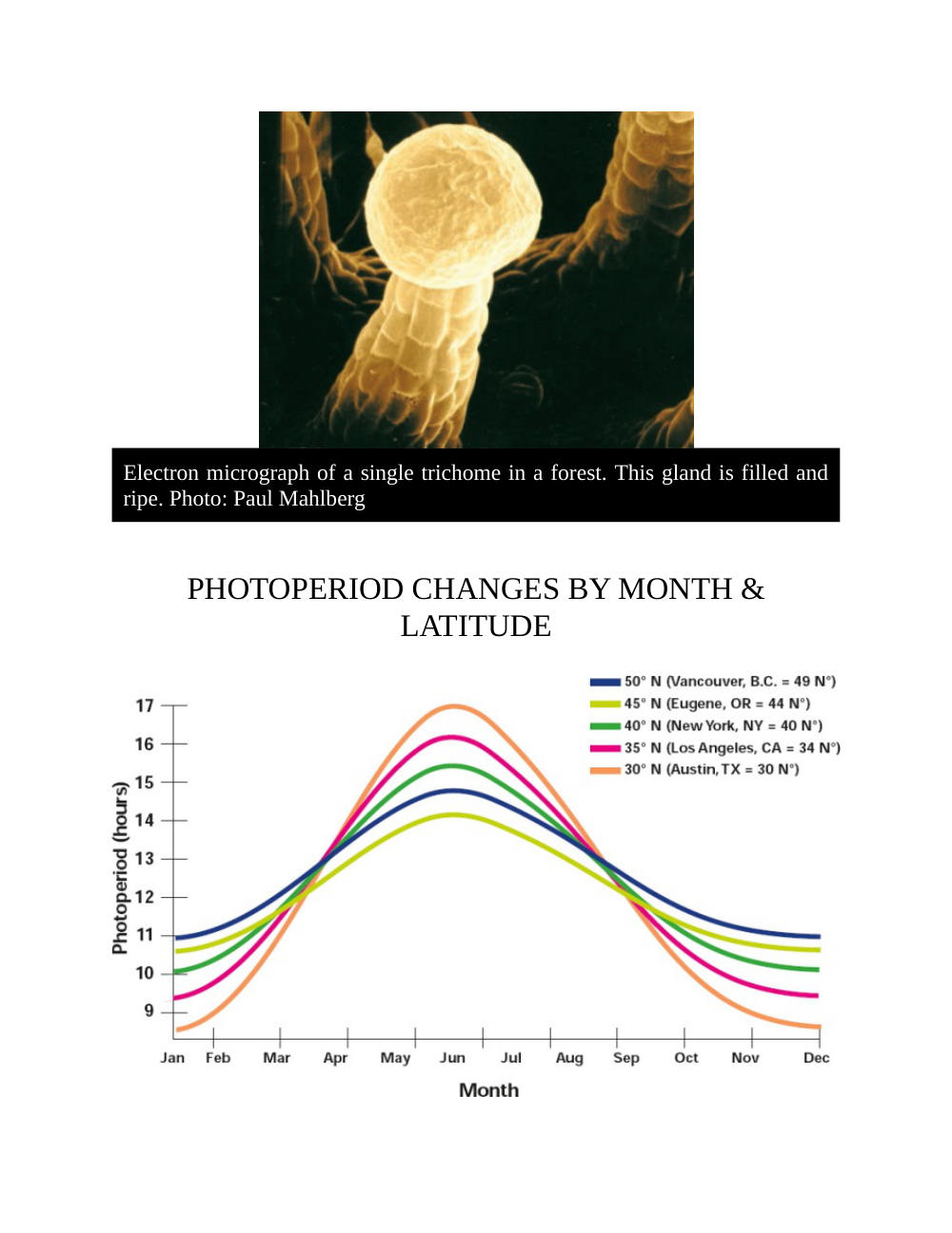
Some stay vegetative on 10 or 11 hours of dark. Many wait for 12 hours or more, around September 22 in the Northern Hemisphere
Indicas
Many flower on 8 to 11 hours of dark (13 to 15 hours of light). A few southern plants can start as early as the June 22 short night
Finish
Some sativas need even longer nights at the end. Indoors, 14 hours dark and 10 hours light can help them ripen
Outdoor pick
Southern gardens often do better with sativa or sativa-leaning hybrids so plants do not flower in midsummer
Indoor flip
Timer
Lights must hit the same on/off every day. Darkness must stay dark
12/12
Twelve hours on, twelve off. No need to step down from 18 or 24 through intermediate days
No shock
The book says the sudden change does not harm the plants
Week one
Growth habit shifts within about a week as the plant answers the new night
Protect the dark
Red leak
Any red-rich light in the night resets the clock and can stall flower or loosen buds
Consistency
Missed or broken nights cut flower time and can stress a plant into hermaphrodite flowers
Localized
Only the part of a plant that gets the long night will flower. A leak on one side can split the response
Green work light
Green CFL or LED has no red and can be used to walk the room without flipping the hormone