


Early signs
Host
hops races of powdery mildew also hit cannabis
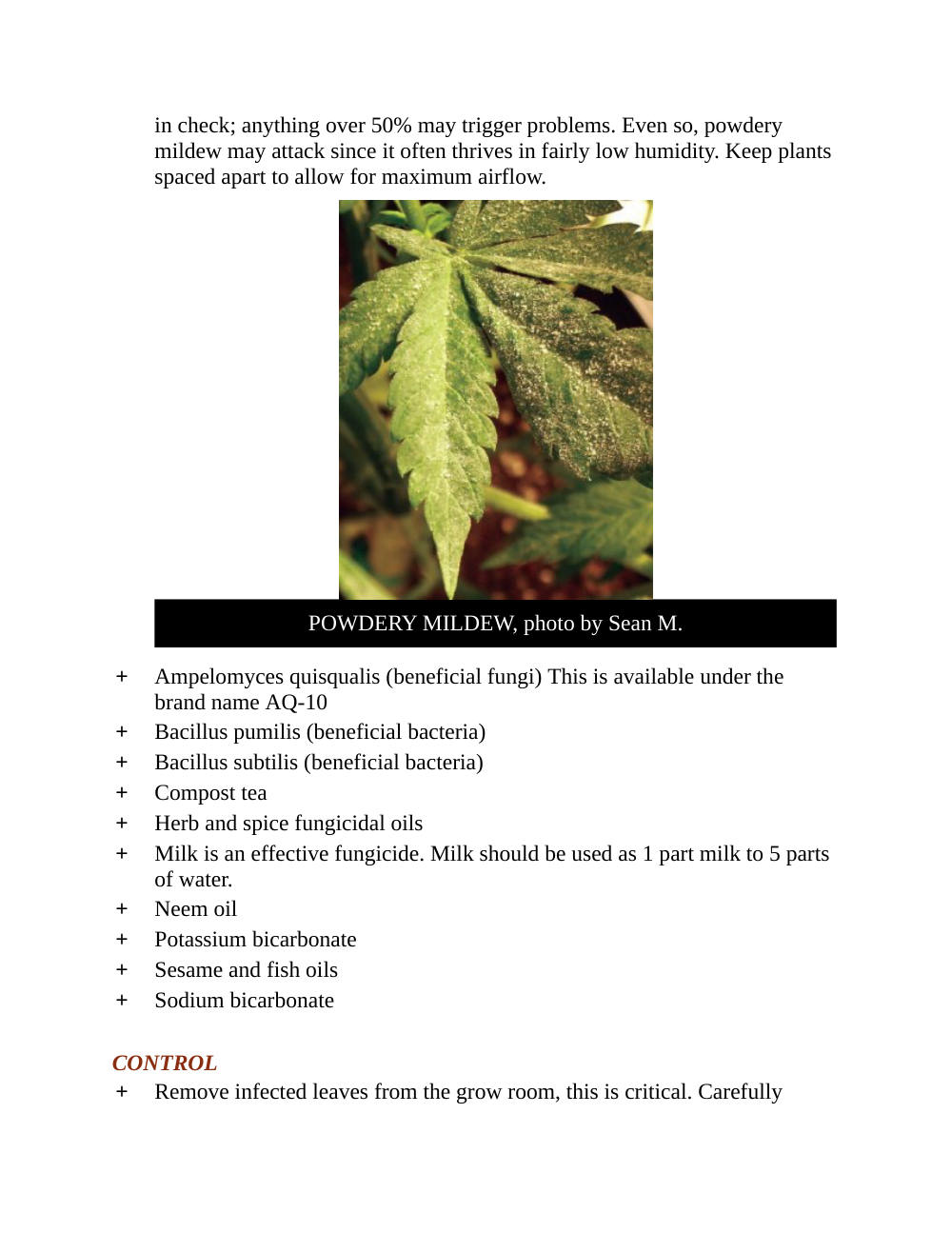
Leaves
raised humps, then irregular white circles that look dusted with flour
Age
young leaves about two to three weeks old are the usual first target
Late
yellowing, browning, black specks in the powder, and buds with a stale, moist smell
How spores arrive
Air
wind and intake vents are the main indoor vectors near cannabis or hops
Cuttings
contaminated clones are a major source
Hitchhikers
clothes, pets, and outdoor animals can deliver spores
Trigger
a host plus humidity, moderate heat, low light, and an acidic surface can wake dormant spores
Environment first
Quarantine
hold new plants away from the main room
Filter
HEPA on intake; UVC, ionizers, or ozone are listed as extra spore killers
Water timing
do not water or foliar spray at lights-off; leave at least five hours of light after a watering
RH
keep humidity in check; over 50% can trigger trouble, though mildew can still appear in drier air
Space
separate plants so air can move through the canopy
Treat and remove
Veg vs flower
Aromainfections in veg are easier
Bag
Milk
Aromathe book uses 1 part milk to 5 parts water as a fungicide
Bicarb
Aromapotassium bicarbonate and pH-up products make the leaf surface less friendly to spores
Biocontrol
Harvest
Aromainfected buds and leaves are not acceptable to smoke in the book’s view