


Read the profile

Hole
Dig about 3 feet so you can see layers, not just the surface crumb
Topsoil
Darkest layer, full of worms and microbes. If you can work it by hand, texture is usually fine
Prairie profile
Nutrients may sit deeper where annual roots composted in place
Subsoil
Sandy, rocky, or loamy subsoil often drains well. Clay or bedrock near the surface does not
Fix
If you hit clay or rock within 3 feet, use raised beds or mounds
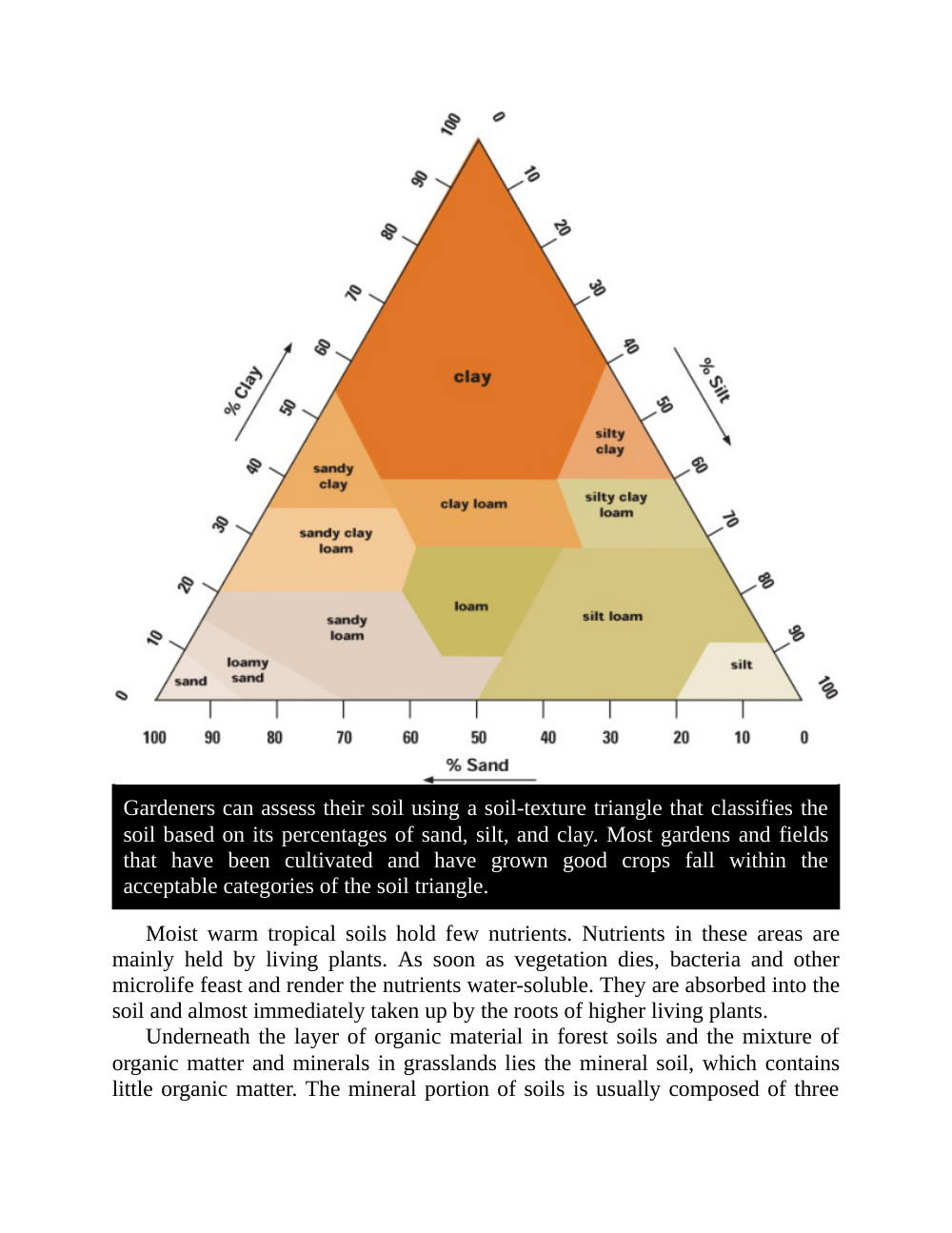
Jar and squeeze tests
Jar
Fill a quart jar two-thirds with water, add soil, shake, and let it settle
Sand
Heavy grains drop first and show quickly at the bottom
Fines
Silt and clay take hours. Clay may stay suspended from water motion
Squeeze
Compress moist soil, then poke the ball. It should break if sandy or loamy
Sticky ball
A hard or gummy clod means too much clay or muck. Amend before planting
Drainage timing
Method
Fill the test hole, wait 30 minutes, then fill again
Fast
Water that disappears quickly points to sandy soil
Stuck
Water still standing after 24 hours means poor drainage
Water table
High groundwater or hardpan can drown roots even if the top looks loose
Beds
Raised, amended soil from the site, or a bought landscape mix, lifts roots above the wet layer
Lab numbers worth asking for
pH
Outside the friendly range, some essentials stop being available
EC
Low means few dissolved nutrients. High can lock water away from roots even when the mix looks wet
Nitrogen forms
Nitrate is easy for plants to use. High ammonium can be harsh
Macros
Check phosphorus, potassium, and calcium. Coir and plain peat are often low in calcium
Physical
Moisture hold, air-filled porosity, and cation exchange show how the medium stores water, oxygen, and nutrients