


How soils form

Forest
Leaf drop builds a top layer that is raw on the surface and finer compost below
Prairie
Annual roots die in place, so organic matter mixes deep into the mineral soil
Warm ground
Heat speeds microbes, so organic matter and stored nutrients stay lower than in cool climates
Tropics
Living plants hold most nutrients. Dead tissue is recycled almost immediately
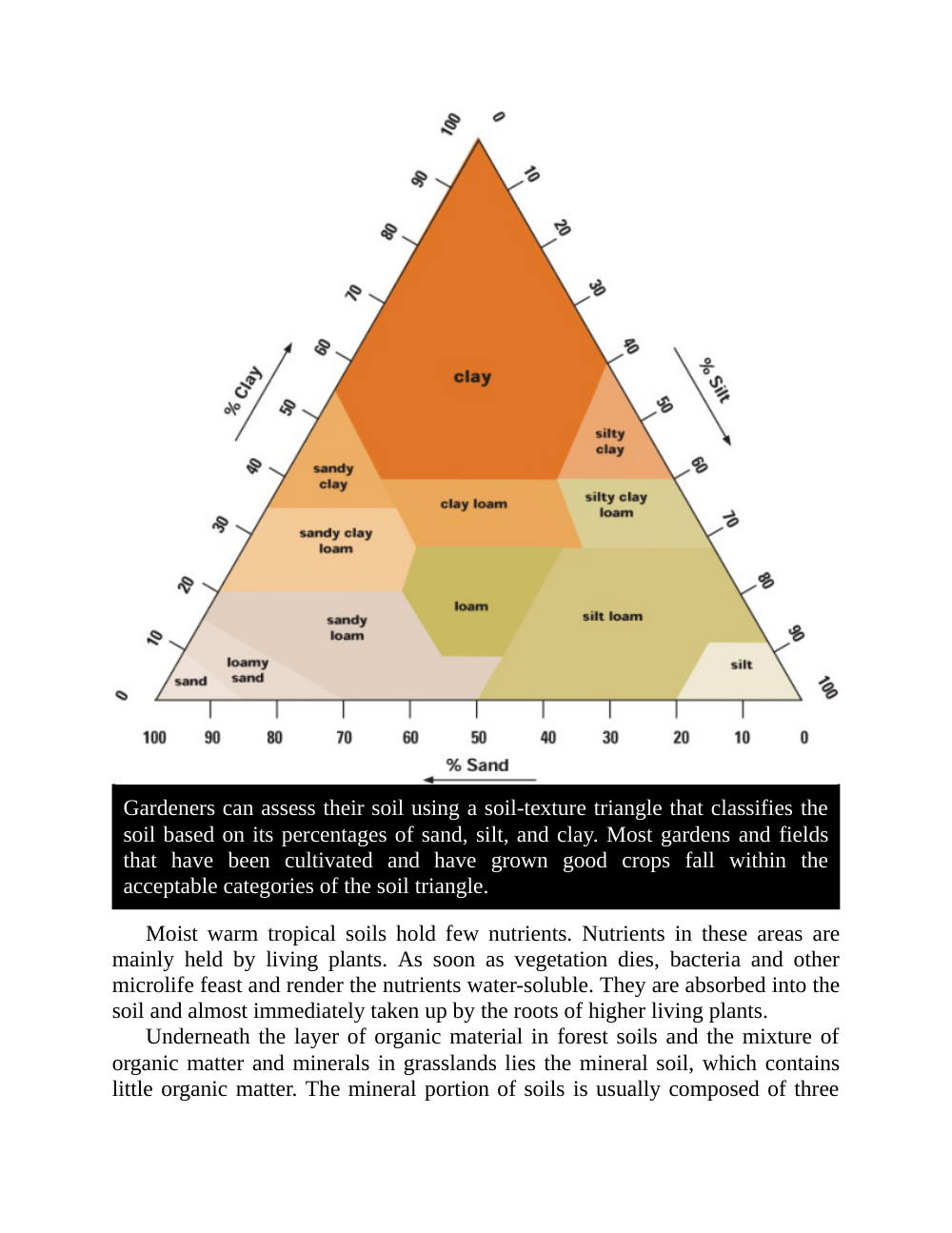
Particle mix
Sand
Large grains drain fast and leach nitrogen. Add compost, coir, peat, or leaf matter to hold water
Silt
Fine, chemically active particles hold nutrients well but can go anaerobic after heavy rain
Clay
Tiny charged particles bind calcium, magnesium, potassium, and sodium, and slow percolation
Loam
A mix of sand, silt, clay, and organic matter leaves pores for both water and air
Muck
Drained bog humus is often fertile and acidic, and usually needs extra potassium
Working each type
Sandy beds
Easy to plant. Hoe the row, feed soluble nutrients, and mulch so water does not vanish
Silty ground
Fertile and easy when damp. Irrigate often and avoid compaction
Clay
Till and open with sand, compost, gypsum, or aged clippings. Red clay usually drains better than blue or gray
Loam
Often the easiest garden soil. Organic loams can grow well with little extra work
Mounds
In wet clay or low spots, raise the crown so the stem and taproot stay out of standing water
Texture that roots like
Goal
Medium texture that drains yet still holds a useful reserve
Failure
A puddle after rain means no air pockets. Weak roots then rot
Hard clay
Dry crusts and clods block lateral roots. Cannabis rarely thrives there unamended
Best start
Test moisture hold and drainage while the soil is moist, not soaked