


When they are ready

Roots and leaves
Wait for a network of roots plus several leaf sets that can handle the new space
New growth
After a clone roots, fresh stem and leaves at the tip mean it can take stronger light
After germ
A seed plant is ready for garden light once the taproot is working and true leaves are open
Speed
A well-set transplant can roughly double in about ten days
How to set the root ball
Base layer
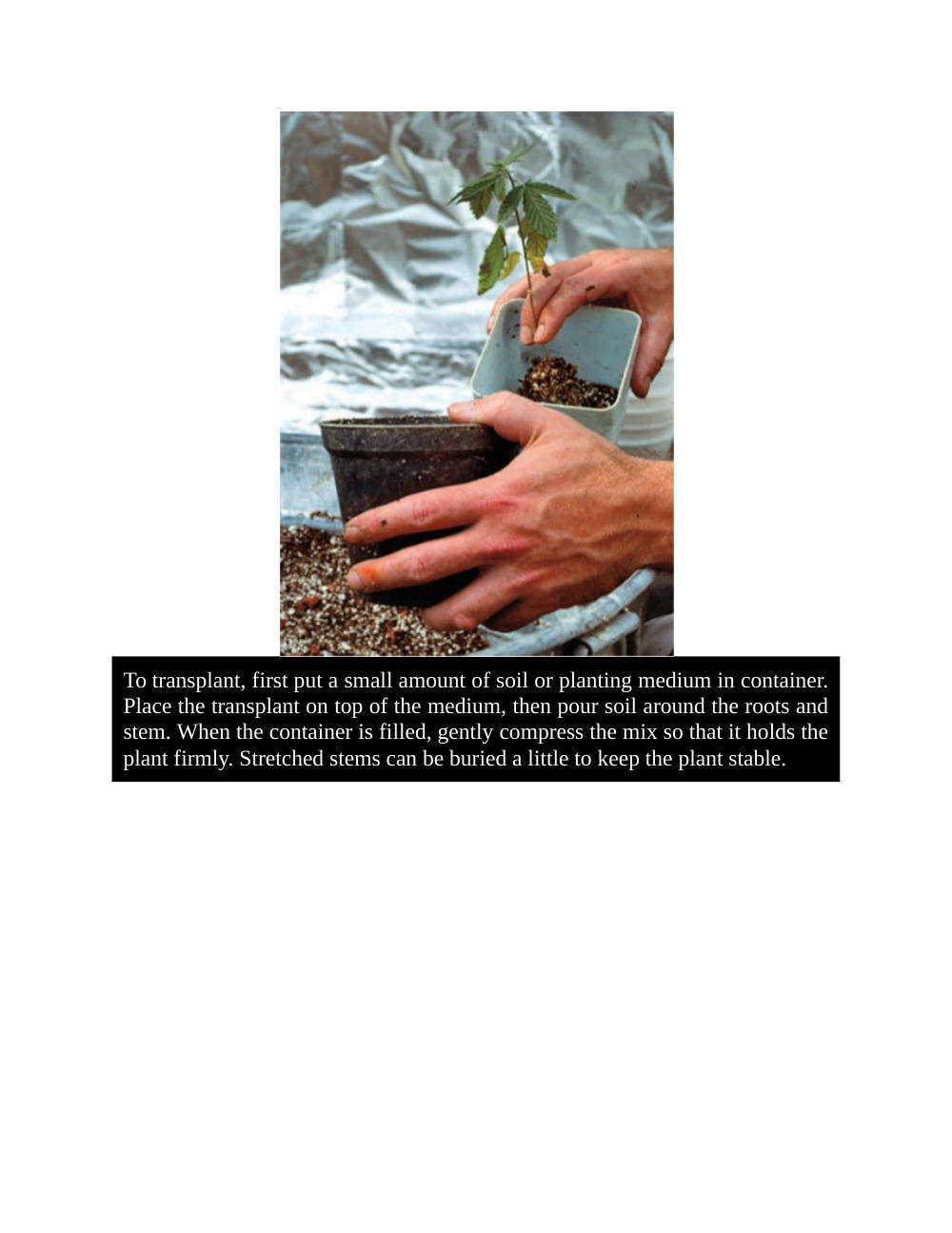
Put a little mix in the pot first, set the plant, then fill around the roots
Depth
Cover the ball just slightly deeper than it sat before, about 0.5 inch (12 mm) extra is a useful target
Stretch
Bury extra stem on a lanky seedling so it stands without a crutch
Firm
Pat the mix so the plant is held, not floating in air pockets
Pot sizes and timing
8 oz (0.25 L)
About 7 to 10 days of root room after germination
16 oz (0.5 L)
About 10 to 20 days. A 32 oz pot grows faster than staying in the small cup
1 gallon (3.75 L)
About 15 to 30 days, and a good size for sexing before the final pot
Step-up trade
Extra transplants cost a little growth, but they keep light on plants instead of empty floor
Too small
An undersized pot slows and stunts. An oversized pot does not harm the plant
Roots vs canopy
Soil rule
Canopy is usually about equal to the root mass, or at most about one third larger
Scale
A 10 foot (3 m) canopy often sits on a 6 to 10 foot (2 to 3 m) root spread. A 2 foot canopy tracks the same ratio
Hydro
Dense, well-fed roots can support a canopy from pot-width up to about three times as wide
Feed after move
Enriched mix can carry a seedling about a week. Lean mix or hydro needs fertilizer sooner