


Why water works

Ice dual role: Cold makes gland necks brittle, and the cubes scuff the leaf during stirring.

Sink versus float: Heavy heads drop through the work bag. Leaf stays above.

Cleaner product: The wash can leave behind green dust, some mold, and surface residues.

Yield range: A quarter to one ounce (7 to 28 g) per 8 ounces (0.25 kg) of starting material is a common band.
Bag basics

Micron sort
Finer bags catch smaller heads and separate grades in one run
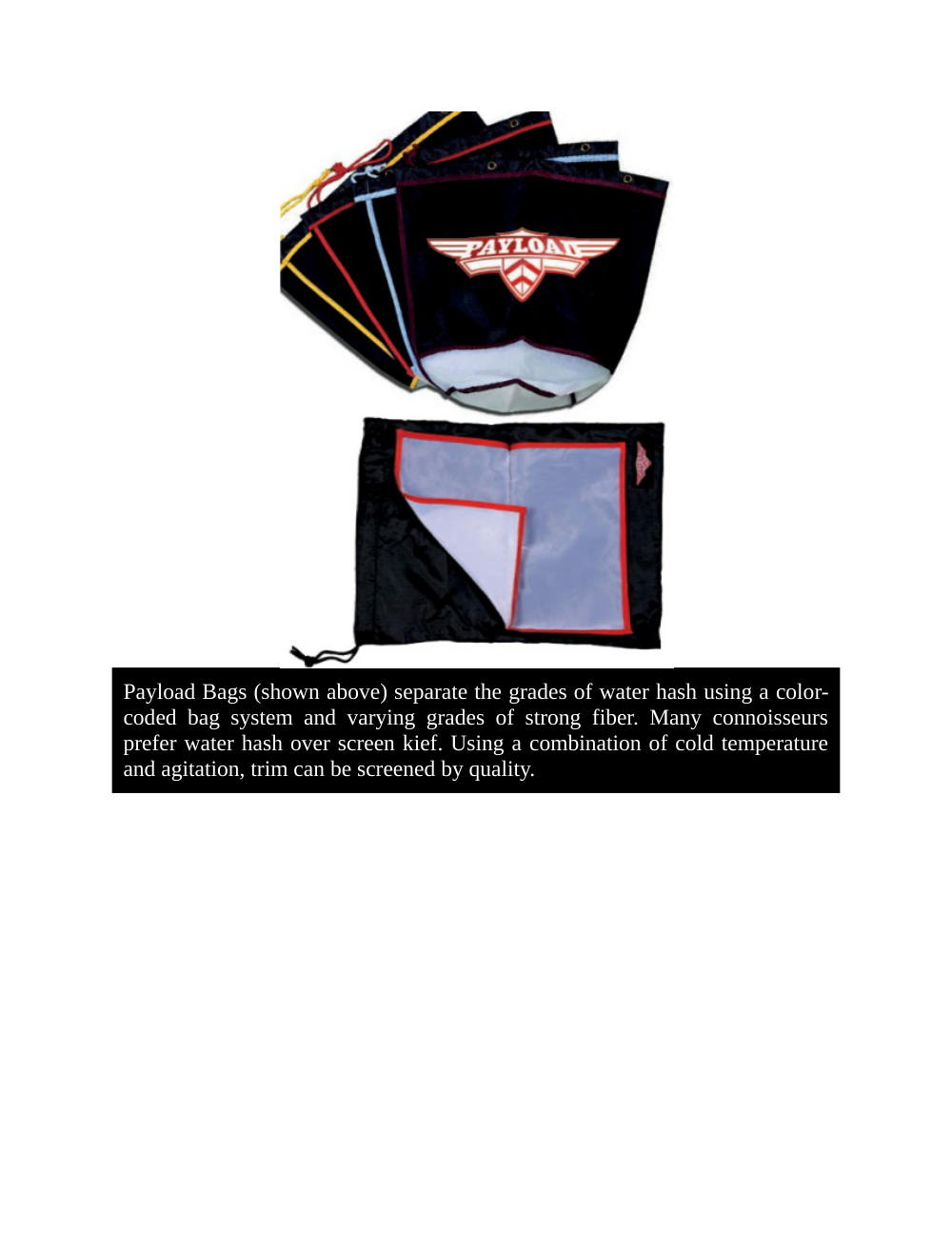
Work bag on top
The coarsest bag holds the leaf. Finer bags sit below it
No big sticks
Twigs tear mesh. Coarse chop is enough because glands sit on the surface
Time
A full cycle often takes three to six hours of staged mixing and settling
Starting material
Any gland-bearing trim
Leaf, sugar trim, shake, or small flowers all work
Fresh or dry
Both can be washed. Cold material behaves better
Freezer hold
In humid rooms, store dried trim cold so it does not mold before you wash
Grade shows in color
The finest catch is usually light tan. Greener catch has more plant dust
Dry before you store
Press the water
Towel-press the wet paste several times before it air-dries
Mold risk
Water left in the mass will spoil hash in a jar
Then press
Only fully dry kief or water hash should be pressed into a cake
Leftover water
Spent wash water still holds some nutrients and can go on garden plants