


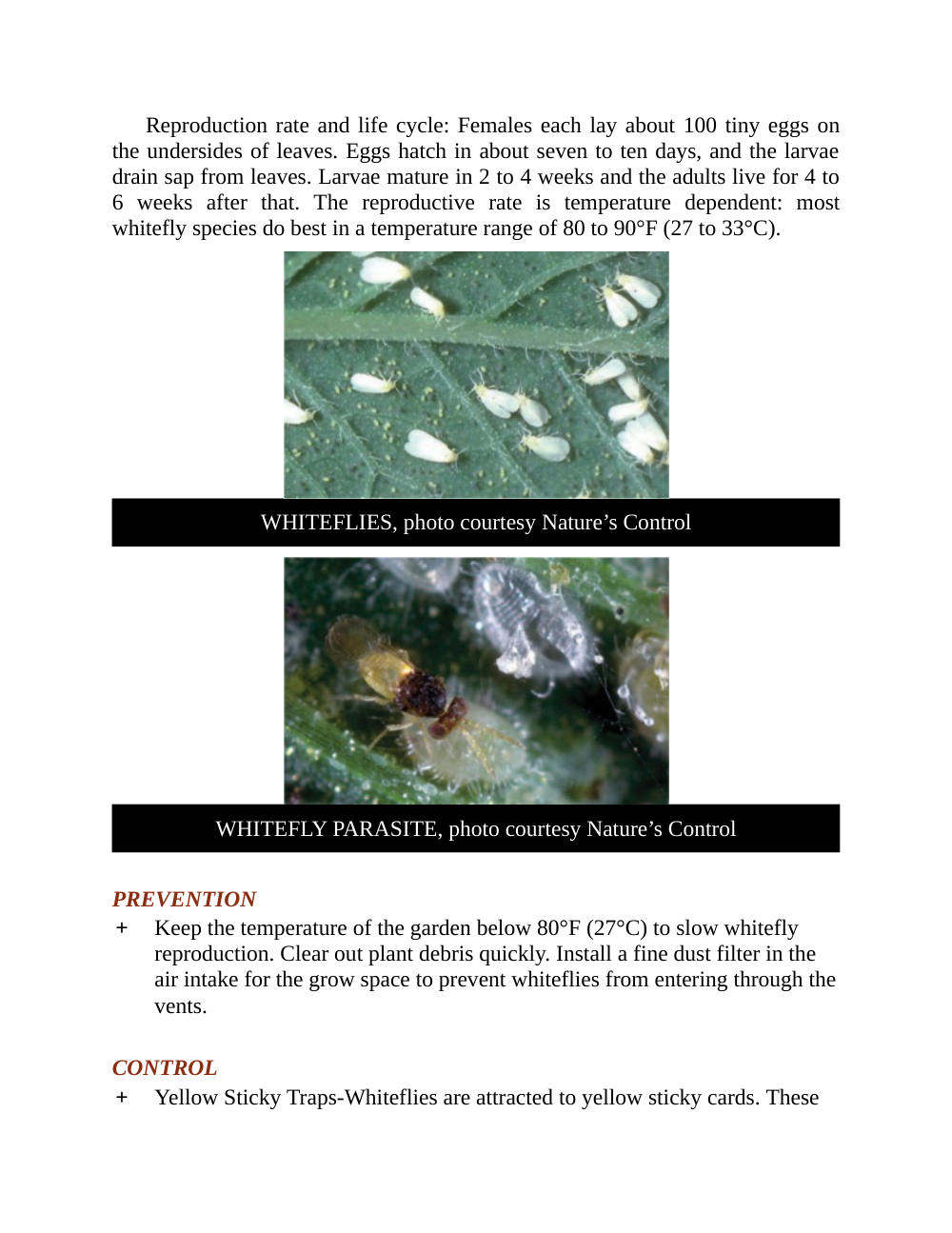
ID and damage

Look
about 0.04 inch (1 mm), powdery wax, more like a tiny moth than a true fly
Kin
relatives of aphids and scale, with the same sap-sucking habit
Flight
disturb the plant and they lift, then settle back on the undersides
Plant
spotted, drooping leaves, honeydew, extra mold risk, and virus spread
Breeding window
Eggs
about 100 per female on leaf undersides, hatching in roughly 7 to 10 days
Adults
live another 4 to 6 weeks after a 2 to 4 week larval period
Heat
most species do best around 80 to 90 F (27 to 33 C)
Slowdown
keep the garden under 80 F (27 C) to cut the reproductive rate
Prevention
Debris
clear plant waste quickly
Filter
a fine dust filter on intake blocks flying adults
Cards
yellow sticky traps catch some and show whether numbers are rising
Shake test
if you suspect them, shake the plant and watch for the white cloud
Control options
Vacuum
shake them off, then suck them from the air with a hose attachment
Remove
take heavily loaded plants out of the room before you treat the rest
Encarsia
tiny wasps that lay eggs in immature whiteflies; one indoor release can build on its own
Helpers
lacewing larvae, pirate bugs, Beauveria, soap, neem, pyrethrum, sesame oil, and herbal oils
Note
the book also lists carbon dioxide among whitefly controls