


Wick basics

Action
As the mix dries, capillary pull draws solution up braided nylon rope
Layout
Two wicks per pot, crossed at 90 degrees, from reservoir floor through the pot and back down
Rope size
About 0.25 inch rope for pots to 6 inches, up to 0.75 to 1 inch rope for pots over 15 inches
Ends
Melt or glue cut nylon so it does not unravel
Self-regulate
Delivery matches evaporation and transpiration. The job is keeping the reservoir full
Media and setup
Mix
Almost any potting mix will wick. Add about 20 percent vermiculite if it stays too dry
Inert blend
Half vermiculite and half perlite gives full control of the feed
Life
About 10 percent castings or compost adds microbes without turning the pot into soil soup
Support
Raise pots 4 to 6 inches on blocks or a pallet so wicks hang into the tray
Prime
Water from the top once so mix and wicks are fully wet
Limit
Extra wicks do not help past the medium's saturation point
Bucket and automated wicks
Nested buckets
Inner pot on a spacer inside a sealed outer reservoir
Rain
Outdoor overflow holes just below the inner pot prevent a flood
Siphon
Linked reservoirs with a float valve can refill with no pump once primed
Kiddie pool
A pallet in a pool, wicks to the pool floor, is a cheap multi-pot version
Roots in water
If roots run the wick, growth often jumps. That is convenience, not a failure
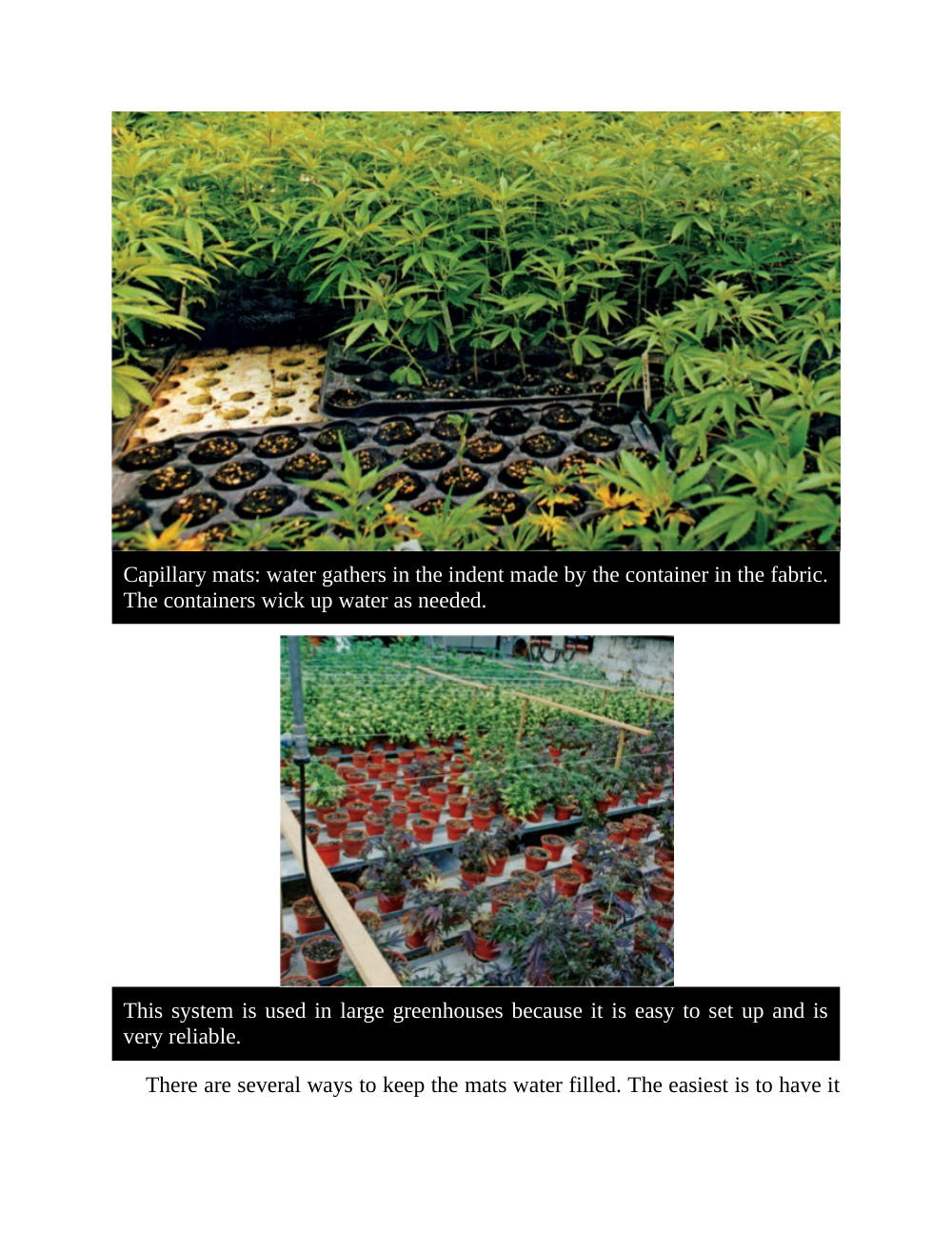
Capillary mats
Mat
Soft polyester under perforated opaque plastic, about a quarter inch thick
Table
Line the bench, slope about 2.5 percent, and set pots with bottom drain holes on the mat
Demand
Each pot compresses a puddle and pulls only what it needs, so mixed plant sizes can share a bench
Height
Reliable up to pots about 10 inches tall
Fill
Drape the mat into a reservoir, or pump solution across and return the drip