


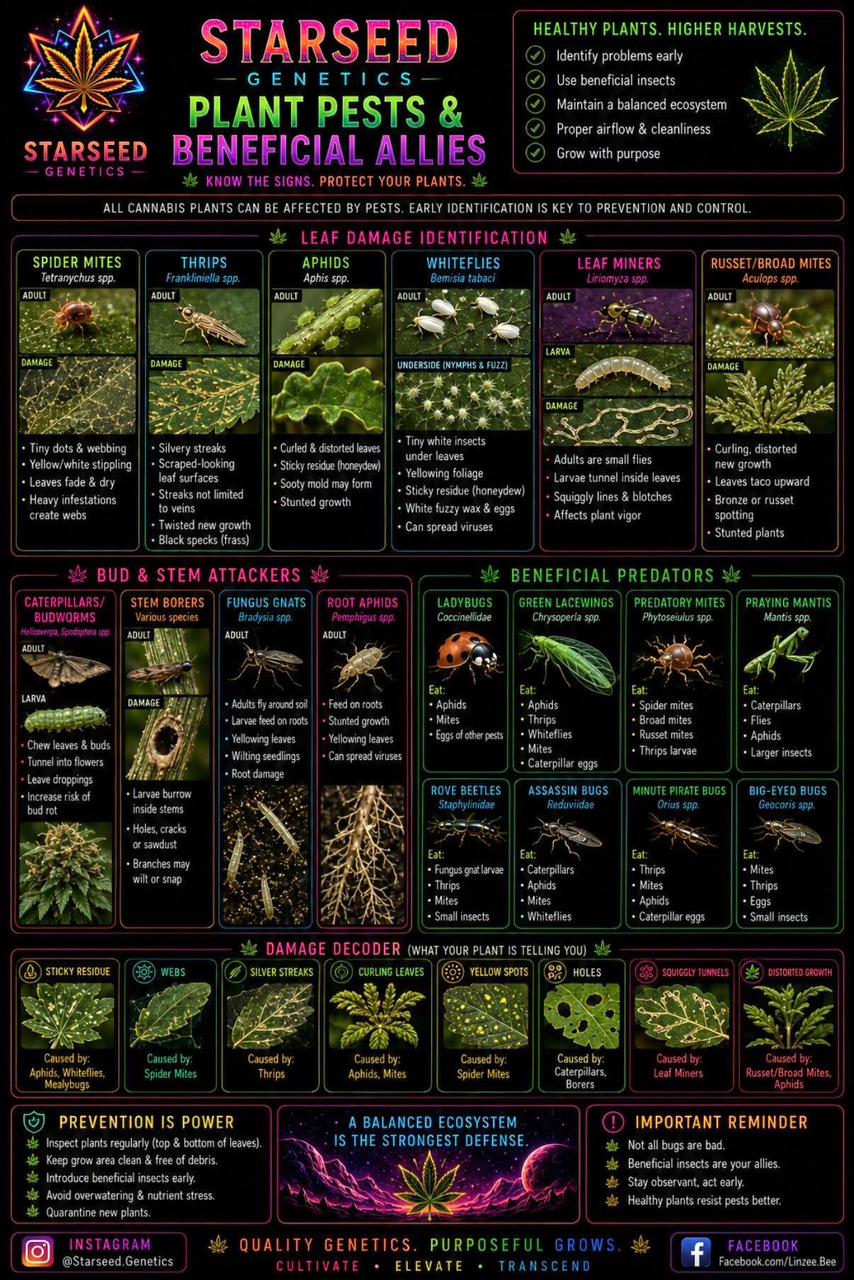
Leaf damage identification

Spider mites
tiny dots and webbing, yellow or white stippling, fading leaves and dry damage
Thrips
silvery streaks, scraped-looking leaf surfaces, twisted new growth and black frass specks
Aphids
curled or distorted leaves, sticky residue, possible mold from honeydew and stunted growth
Whiteflies
tiny white insects under leaves, yellowing, honeydew residue and possible virus spread
Leaf miners
squiggly tunnel lines, blotches and reduced vigor
Russet or broad mites
distorted new growth, tacoing leaves, bronze or russet spotting and stunting
Bud and stem attackers

Caterpillars or budworms chew leaves and buds, tunnel into flowers and raise bud-rot risk.

Stem borers tunnel inside stems, leaving holes, cracks or sawdust and causing branches to wilt or snap.

Fungus gnats have larvae that feed in the root zone and can yellow or wilt plants.

Root aphids feed on roots, stunt growth, yellow leaves and can spread issues.
Beneficial predators listed
Ladybugs eat aphids, mites and eggs of other pests.
Green lacewings eat aphids, thrips, whiteflies, mites and caterpillar eggs.
Predatory mites target spider mites, broad mites, russet mites and thrips larvae.
Praying mantis, rove beetles, assassin bugs, minute pirate bugs and big-eyed bugs are all shown as allies against mixed pest pressure.
Damage decoder and prevention
Sticky residue points to aphids, whiteflies or mealybugs.
Webs point to spider mites, silver streaks to thrips and squiggly tunnels to leaf miners.
The poster advises inspecting plants regularly including leaf undersides, keeping the grow clean, introducing beneficial insects early, avoiding overwatering stress and quarantining new plants.